Living with CMT
Charcot-Marie-Tooth, and me.
I’ve lived with Charcot-Marie-Tooth disease, usually called CMT, since I was five. It’s the reason I can’t walk or use my hands the way most people do, and a big part of why I build businesses that run on systems.
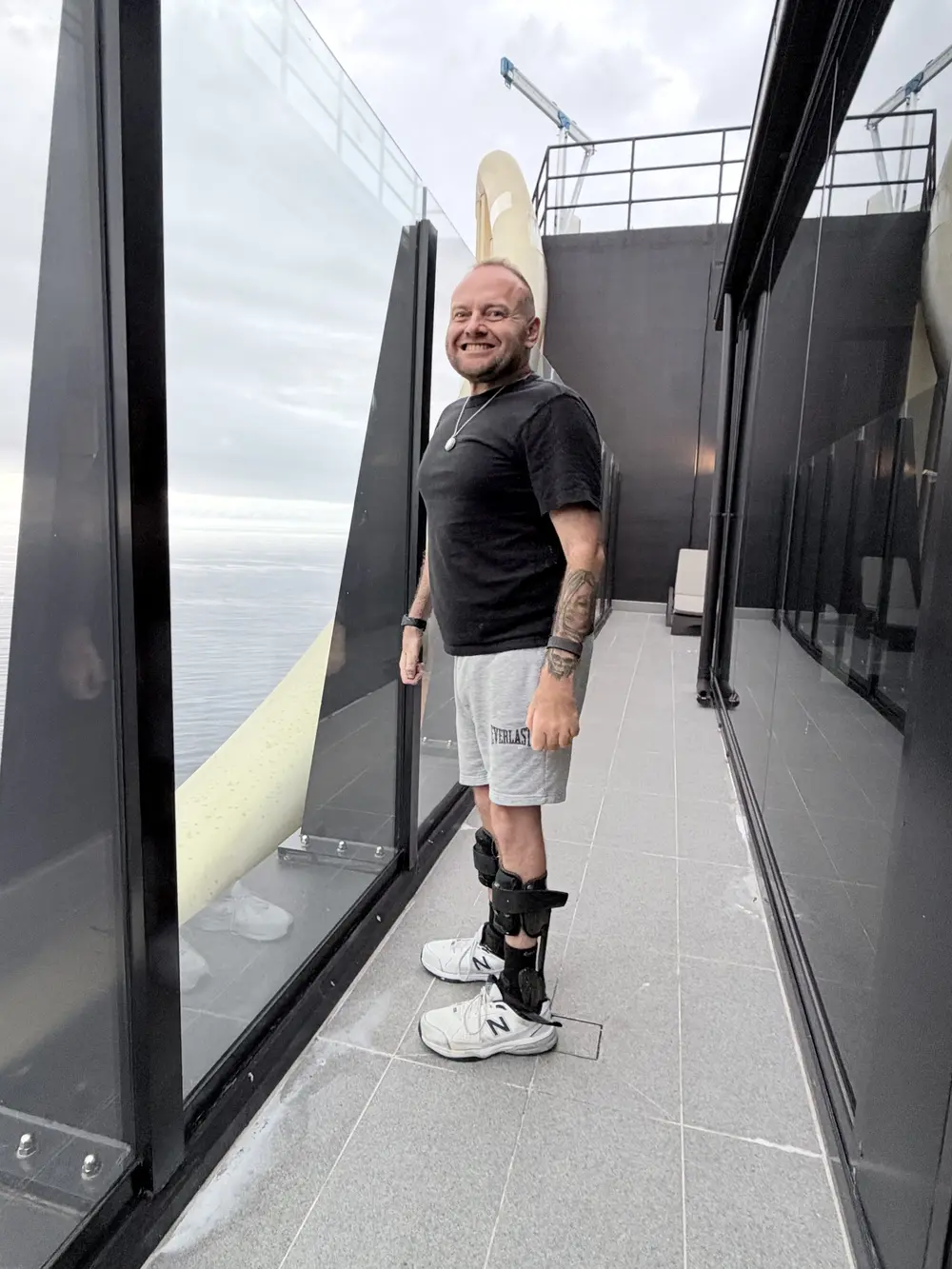
My side of it
CMT showed up when I was five. It affects my legs and my hands, so I wear leg braces and do a lot of things differently to most people.
I won’t sugar-coat it: day to day, it’s frustrating and genuinely difficult. But I do my best to stay active in the gym and active in the mind, and I don’t let it decide what I build.
I’ve never let it be the headline. It just changed the way I work. When you can’t do everything with your own two hands, you get very good at building systems, finding the right people and making things run without lifting them yourself. That’s the thread through every business I’ve run, from fixing computers in Bodalla to TurnKey and NETALYST today.
“If something can run without me lifting it, I’ll find the way.”
I share this because a lot of people with CMT don’t know anyone else who has it. If that’s you, or someone you love, I hope seeing someone get on and build things helps a little.
What is CMT?
The short explainer.
General information only. Everyone’s CMT is different, so talk to a GP or neurologist about your own situation.
What it is
CMT is a group of inherited conditions that damage the peripheral nerves, the nerves running from the brain and spinal cord out to the arms and legs. It’s the most common inherited neuropathy, and it’s also called hereditary motor and sensory neuropathy.
Where the name comes from
It’s named after the three doctors who described it in 1886: Jean-Martin Charcot and Pierre Marie from France, and Howard Henry Tooth from the UK. Nothing to do with teeth.
How it shows up
It usually starts in the feet and legs and can later affect the hands and arms: weaker, smaller muscles, high arches, balance problems and less feeling in the feet and hands. It tends to get worse slowly over time.
It’s different for everyone
Severity varies hugely from person to person, even within the same family. Symptoms often appear in childhood or the teenage years, but can start earlier or later.
Why it happens
CMT is caused by changes in genes that look after the peripheral nerves. It’s usually passed down through families, though it can also appear with no family history. There are many types, caused by different genes.
Living with it
There’s no cure yet, but research is ongoing. Physiotherapy, occupational therapy, braces and orthotics, and sometimes surgery help people stay active and independent. Many people with CMT work and live full lives.
Support in Australia
CMT Australia
The Charcot-Marie-Tooth Association Australia has supported people and families living with CMT since 1988, with information, support groups, a national conference and programs for kids.
Sources: NHS, healthdirect Australia, Mayo Clinic, US National Institute of Neurological Disorders and Stroke, Brain Foundation Australia and CMT Australia. This page is general information, not medical advice.
Work with me
CMT never stopped me building.
If you want to talk business, I’m always up for a good conversation.